
WELCOME BONUS 300%
UP TO €2000 + 100
FREE SPINS
UP TO €2000 + 100
FREE SPINS
Home → Games
Casino games at Lucky Reels Casino
Straight-Up, Split and Corner Compared
On European Roulette, a straight bet covers one number and pays 35:1, a split covers two numbers and pays 17:1, and a corner covers four numbers and pays 8:1. The European wheel holds 37 pockets, so all three bets carry the same 2.70% house edge and the same 97.30% RTP despite the very different payouts. A €10 straight returns €360 on a win, while the same €10 on a corner returns €90, yet over many spins both bets cost the player €0.27 per €10 staked on average.
The apparent difference lies in hit frequency, not in value: a straight lands once per 37 spins, a split twice per 37 spins, and a corner four times per 37 spins. That is why the European wheel assigns 35:1, 17:1 and 8:1 respectively, so the total return per pocket stays identical. A player staking €100 across corners at €8 per bet loses roughly €2.70 on average, exactly the same as €100 split across straight bets.
On the French wheel, La Partage does not apply to inside bets, so a straight, split or corner keeps the 2.70% edge rather than the lower figure available on even-money bets. The published payouts on French inside bets match the European set: straight 35:1, split 17:1, corner 8:1. That leaves the inside layout of the French wheel economically identical to the European wheel for these three bets.
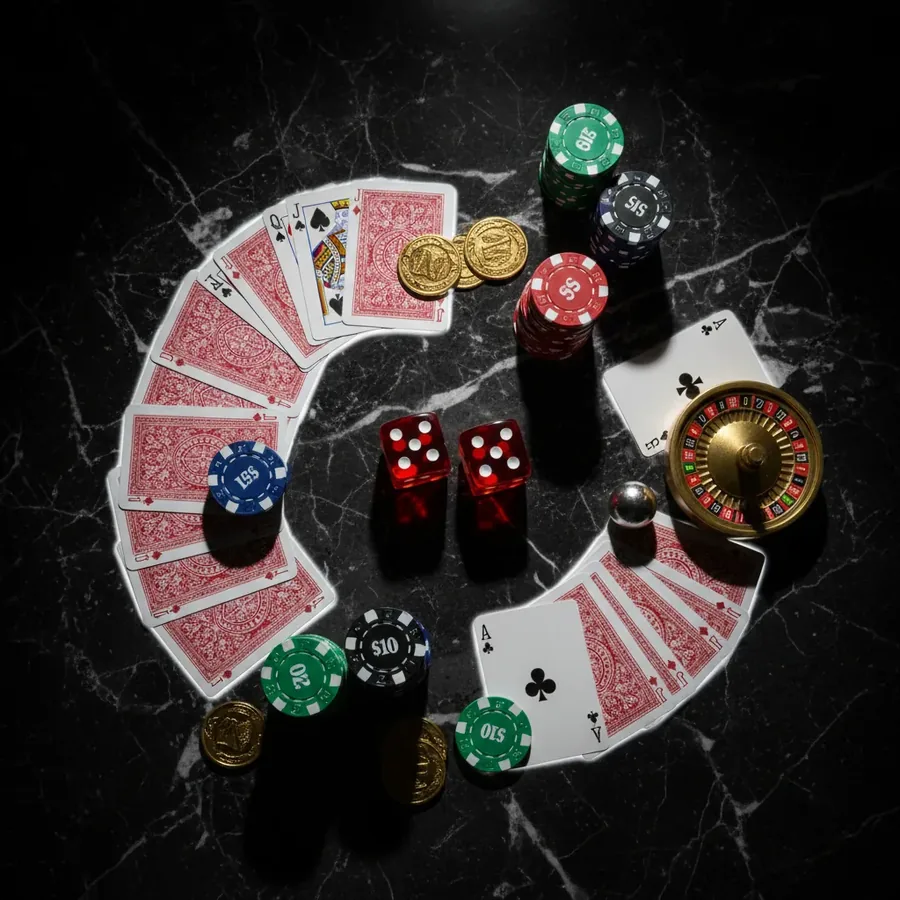
Roulette Wheels: 37 vs 38 Pockets
European Roulette runs on a wheel with 37 pockets (1–36 plus a single zero), giving an RTP of 97.30% and a house edge of 2.70%. American Roulette adds a second zero and therefore 38 pockets, which lifts the base house edge to 5.26%. The one extra pocket nearly doubles the average cost of play, so €100 staked on the European wheel costs €2.70 while the same €100 on the American wheel costs €5.26.
Payouts on the European wheel are set as if there were 36 pockets, which is why the same 2.70% edge appears on every bet: straight 35:1, split 17:1, street 11:1, corner 8:1, six line 5:1, dozen 2:1, column 2:1, and even-money bets at 1:1. The American Five Number Bet (0, 00, 1, 2, 3) is the exception, with an RTP of 92.11% and a house edge of 7.89%, the only bet on that wheel above 5.26%. No equivalent bet exists on the European layout.
The 37-pocket wheel is the reference point for the odds shown across the rest of the table: any straight bet on it wins once per 37 spins, while a split wins twice. A player who prefers more frequent, smaller wins can move to dozens and columns at 2:1, which still carry the same 2.70% edge on the European wheel. The choice between the two wheels therefore comes down to one number, not to strategy.
Corner Pays 8:1, Dozen Only 2:1
A corner bet on European Roulette covers four numbers and pays 8:1, while a dozen bet covers twelve numbers and pays 2:1. The European wheel has 37 pockets, so both bets return the same 97.30% RTP and carry the same 2.70% house edge despite the fourfold gap in payout. A €10 corner returns €90 on a hit; a €10 dozen returns €30, but the dozen lands three times as often.
The maths behind the payouts is the same on both: 35:1 for a straight, 17:1 for a split, 11:1 for a street, 8:1 for a corner, 5:1 for a six line, and 2:1 for a dozen or a column. Each step widens the coverage while shrinking the payout, so the product of probability and payout stays fixed at the wheel's 97.30% RTP. Over €100 staked in €10 corner bets, the average cost is €2.70, identical to €100 spread across dozens.
The relevant practical difference is variance: a corner resolves 4 times per 37 spins, a dozen 12 times per 37 spins, so dozen bets produce more frequent but smaller swings. On the American wheel the same dozen and corner bets would face 5.26%, and the Five Number Bet would face 7.89%, but on the European 37-pocket wheel all of these bets stay at 2.70%.
Columns and Dozens Pay 2:1 in Roulette
A column bet and a dozen bet on European Roulette each cover twelve numbers and pay 2:1. With 37 pockets on the wheel, the payout implies a 97.30% RTP and a 2.70% house edge, the same as a straight at 35:1, a split at 17:1 or a corner at 8:1. Staking €100 across columns or dozens therefore costs €2.70 on average, no better and no worse than inside bets.
The layout offers three dozens (1–12, 13–24, 25–36) and three columns, giving six possible wagers of twelve numbers each. Any single number belongs to exactly one dozen and one column, so a €10 column and a €10 dozen can be combined without overlapping numbers. Even-money bets such as red or black, odd or even, and 1–18 or 19–36 also pay 1:1 with the same 2.70% edge on the European wheel.
On the French wheel, La Partage does not apply to inside bets, so a column or dozen that is treated as an inside bet keeps the 2.70% edge. The European and French layouts share the same 37 pockets, the same payouts and the same house edge of 2.70% for these bets. The only place the 2:1 payout changes value is the American wheel, where the extra zero lifts the base edge to 5.26%.
Doubling Down: Twice the Stake, One More Card
In Blackjack, a double down doubles the stake and the player receives exactly one more card. The rule appears in the six-deck, S17, DAS, DOA, 3:2 game, which carries an RTP of 99.54% and a house edge of 0.46% under basic strategy. A €10 double turns into a €20 total exposure on a single card, and the payout on a win remains 1:1, with a natural blackjack still paid at 3:2.
Doubling after a split improves RTP by about 0.14 percentage points, while resplitting aces adds 0.08 percentage points. A dealer who hits soft 17 instead of standing lowers RTP by 0.22 percentage points, and moving from 6 decks to 8 decks costs roughly 0.02 percentage points. In the six-deck game with DAS and S17, the 0.46% edge already assumes the player doubles on any first two cards.
A split can produce up to 4 hands, and split aces usually receive one card each, which limits how much a double can be layered onto a split ace. Insurance pays 2:1 and is a separate side bet, not part of the double down. Basic strategy is what makes the 99.54% RTP reachable; any deviation moves the effective return below that figure.
Game categories at a glance
| Category | Examples | Stakes From | Highlight |
|---|---|---|---|
| Slots | Book of Dead, Take Olympus, Sun of Egypt 3 | 0.10 EUR | thousands of titles |
| Table games | Roulette, Blackjack, Baccarat | 0.50 EUR | classic rules |
| Live casino | Quantum Roulette, Blaze Roulette | 0.20 EUR | real dealers |
| Jackpot games | Mega Moolah, Divine Fortune, Age of the Gods | 0.20 EUR | progressive pools |
| Instant games | Aviator, Plinko, Mines | 0.10 EUR | fast rounds |
| Video poker | Jacks or Better, Deuces Wild | 0.25 EUR | strategy based |
Full Pay Deuces Wild Reaches 100.76% RTP
Full Pay Deuces Wild with the 25/15/9/5/3/2/2/1 table offers an RTP of 100.76% and a negative house edge of −0.76%, making it positive EV for the player. The pay table awards a natural royal at 800, four deuces at 200, a wild royal at 25, five of a kind at 15, a straight flush at 9, and four of a kind at 5. The house edge of −0.76% means the casino loses 0.76 € per 100 € staked on average over the long run, provided the player uses flawless optimal strategy and the maximum bet.
The smallest deviation from optimal strategy pushes the RTP below 100%, which removes the player advantage completely. All four deuces are wild, so hand evaluation changes sharply compared with Jacks or Better, and strategy errors are costly. A full pay table is the only mainstream game with an RTP above 100% under perfect play. The critical condition is that the casino actually offers the 25/15/9/5/3/2/2/1 schedule, because near full pay versions carry lower returns.
Not So Ugly Ducks Deuces Wild pays five of a kind at 16, a straight flush at 10 and four of a kind at 4, producing an RTP of 99.73% and a house edge of 0.27%. Illinois Deuces falls further to 98.91% RTP. The difference between Full Pay and NSUD is 100.76% against 99.73%, which translates to 0.76 € gained per 100 € staked on the full pay table against 0.27 € lost on the NSUD table. Players must check which pay table is actually loaded before betting.
Video Poker: Check the Paytable Before You Bet
Jacks or Better 8/5 with a full house payout of 8 and a flush payout of 5 carries an RTP of 97.29% and a house edge of 2.71%. Cutting just 2 payout units from the 9/6 schedule costs 2.25 percentage points of RTP, which is a significant long-run penalty. A 100 € session on 8/5 loses 2.71 € on average, while the same stakes on 9/6 would lose only about 0.46 €. The payout table is the single most important piece of information for video poker players.
Intermediate Jacks or Better tables show 9/5 at 98.45% RTP, 8/6 at 98.39% RTP, 7/5 at 96.15% RTP and 6/5 at 94.99% RTP. The spread from 9/6 to 6/5 is more than 4.5 percentage points, which turns a near break-even game into a clearly losing one. A royal flush pays 800, a straight flush 50, four of a kind 25, a straight 4, three of a kind 3, two pair 2 and jacks or better 1 across these tables. The full house and flush values are the quickest way to identify the table quality.
Deuces Wild full pay shows a positive player expectation of 100.76% RTP, while a short pay 8/5 Jacks or Better game shows 97.29%, a gap of 3.47 percentage points. The house edge on the first is −0.76% and on the second 2.71%, meaning the casino keeps 2.71 € per 100 € staked on the short pay table but loses 0.76 € on the full pay Deuces Wild game. A player who ignores the payout table cannot know whether a game is mathematically favourable or costly.
Straight-Up 35:1 Against 1-in-37 Odds
A straight bet on European roulette covers a single number among 37 pockets and pays 35:1. The true odds against winning are 36 to 1, so the 35:1 payout leaves the casino with a 2.70% house edge and the player with a 97.30% RTP. A stake of 100 € on a straight bet loses 2.70 € on average per spin over the long run. The same 35:1 payout applies to inside bets on American roulette, where the double zero raises the true odds against winning to 37 to 1.
The common inside payouts on the European wheel are split at 17:1, street at 11:1, corner at 8:1, six line at 5:1, dozen at 2:1 and column at 2:1. Each of those payouts is calculated as if there were 36 pockets, while the wheel actually has 37. That shortfall of one pocket creates the identical 2.70% house edge on every inside bet. A dozen bet at 2:1 covers 12 numbers, so the true odds are 25 to 12 against winning, yet the payout is only 24 to 12.
The American five number bet pays 6:1 for covering 5 of 38 pockets, which is far worse than the European straight bet's 35:1 against 1 in 37. The five number wager carries a house edge of 7.89% and an RTP of 92.11%, while the European straight carries a house edge of 2.70% and an RTP of 97.30%. Staking 100 € on the five number bet loses 7.89 € on average, compared with 2.70 € on the European straight. The payout table alone can mislead a player who does not compare it with the wheel's true odds.
American Roulette: 5.26% Because of the Double Zero
American roulette uses 38 pockets with a single zero and a double zero, while the European wheel uses 37 pockets with only a single zero. The extra double zero is not offset by any additional payout, so the standard house edge on American roulette is 5.26% against 2.70% on the European wheel. A stake of 100 € loses 5.26 € on average on American roulette, nearly double the 2.70 € loss on European roulette. The double zero is the entire cause of the difference.
The five number bet covering 0, 00, 1, 2 and 3 pays 6:1 but carries an RTP of 92.11% and a house edge of 7.89%, because it covers only 5 of 38 pockets while the payout is calculated on a smaller basis. No equivalent bet exists on the European wheel. The same 100 € staked on the five number bet loses 7.89 € on average, which is 2.63 percentage points worse than the standard American edge of 5.26%. This bet is a trap wager with no counterpart on the single-zero layout.
Craps offers a sharp contrast: the Pass Line bet carries a house edge of 1.41% and an RTP of 98.59%, while the Don't Pass edge is 1.36% and the Free Odds bet carries a house edge of 0.00% at true odds. The 3-4-5x odds mode combined with Pass Line produces a house edge of 0.37%. A player staking 100 € on Pass Line with full odds loses 0.37 € on average, against 5.26 € on American roulette and 2.70 € on European roulette. The double zero therefore makes American roulette the weakest standard table game among these options.
35:1 Instead of 36:1: Where the House Edge Comes From
Roulette European pays a straight bet at 35:1 on a wheel with 37 pockets, numbered 1 through 36 plus a single zero. The payout is calculated as if only 36 pockets existed, which creates the gap between true odds and paid odds. Every bet on this wheel carries the same house edge of 2.70 percent, because the shortfall is identical across straight, split, street, corner, six line, dozen, column and even-money wagers.
The arithmetic is direct: with 37 pockets, a straight bet should pay 36:1 at true odds, but the casino pays 35:1. That missing unit is the house edge, and over 100 EUR staked on a straight bet the average retained amount is 2.70 EUR. A split pays 17:1 instead of the true 17.5:1, a street 11:1 instead of 11.33:1, and the same principle applies to every other bet on the layout.
French roulette inside bets show the same 2.70 percent figure, since La Partage does not apply to straight, split, street, corner or six line wagers. The American five number bet covering 0, 00, 1, 2 and 3 is far worse at 7.89 percent house edge, with a 6:1 payout covering only 5 of 38 pockets. That bet has no equivalent on the European wheel and stands as the clearest example of payout design raising the edge.
6 Decks vs 8 Decks: The House Edge Difference
Blackjack with 6 decks, dealer stands on soft 17, double down on any first two cards, doubling after a split allowed and a 3:2 payout returns 99.54 percent RTP. The house edge is 0.46 percent, and reaching that figure requires basic strategy on every hand. Insurance pays 2:1, a regular win pays 1:1, and blackjack pays 3:2.
An 8-deck game raises the edge by about 0.02 percentage points compared with 6 decks, while the single deck classic rules game sits at 0.15 percent house edge. The difference between one deck and eight decks is roughly 0.48 percentage points, but casinos often offset the single deck advantage by changing the blackjack payout to 6:5. A 6:5 game pays 6 EUR for a 5 EUR bet on blackjack instead of 7.50 EUR.
Rule modifiers shift the edge in both directions. Dealer hitting soft 17 adds 0.22 percentage points, resplitting aces improves the player by 0.08 percentage points, and doubling after a split improves it by about 0.14 percentage points. A 6-deck game with S17, DAS and DOA therefore lands at 0.46 percent, while the same rules with H17 would move closer to 0.68 percent.
How a Blackjack Hand Plays Out: Cards, Decisions, 3:2 Payout
Blackjack single deck with classic rules and a 3:2 payout carries a house edge of 0.15 percent, the lowest figure in the table game set. The player receives two cards and decides between hitting, standing, doubling or splitting. A double requires an additional stake equal to the original wager and delivers exactly one more card, while a split can create up to four hands, with split aces usually receiving one card each.
The 6-deck game with S17, DAS, DOA and basic strategy returns 99.54 percent RTP, meaning a 0.46 percent house edge. Blackjack pays 3:2, a regular win pays 1:1 and insurance pays 2:1. On a 10 EUR bet, a natural blackjack returns 15 EUR in profit, while the same hand on a 6:5 table returns only 12 EUR and is the clearest sign of a weakened table.
Dealer standing on soft 17 keeps the edge lower than hitting soft 17, which adds 0.22 percentage points. Doubling after a split improves the player by about 0.14 percentage points, and resplitting aces improves it by another 0.08 percentage points. Basic strategy is a requirement for these figures: without it, the edge moves well beyond the published values for any blackjack variant.
Straight-Up Pays 35:1, Split Pays 17:1
European roulette pays a straight bet, the plein, at 35:1 on a 37-pocket wheel, and that payout is identical for French roulette inside bets. A cheval, or split, pays 17:1, covering two adjacent numbers. Both payouts are calculated as if the wheel had 36 pockets, and the single zero is the source of the uniform 2.70 percent house edge on every inside and outside bet.
The street pays 11:1, the corner 8:1 and the six line 5:1, while dozens and columns each pay 2:1. Red/black, odd/even and the 1-18/19-36 outside bets all pay 1:1. Every one of these bets carries the same 2.70 percent house edge, because the missing unit in the payout is proportional to the zero pocket across all bet types.
A cheval covering two numbers wins on average once every 18.5 spins, but pays 17:1 instead of the true 17.5:1. Over 100 EUR staked on splits, the average retained amount is 2.70 EUR. The five number bet on the American wheel pays 6:1 for covering 5 of 38 pockets and carries a 7.89 percent house edge, nearly three times the European level.
A 2.70% House Edge: 2.70 EUR per 100 EUR
European roulette carries a house edge of 2.70 percent across all bets, from straight at 35:1 to red/black at 1:1. The conversion is direct: for every 100 EUR staked on the European wheel, the casino keeps 2.70 EUR on average, regardless of whether the bets are placed on inside or outside positions. The RTP is 97.30 percent, which is the inverse figure over the long run.
French roulette inside bets have the same 2.70 percent edge, because La Partage does not cover straight, split, street, corner or six line wagers. The American five number bet is far worse at 7.89 percent, keeping 7.89 EUR per 100 EUR staked. Baccarat Banker with 5 percent commission holds 1.06 percent, while the Player Pair and Banker Pair side bet holds 10.36 percent, the highest edge in the table set.
Craps Don't Pass sits at 1.36 percent, and the Free Odds bet added to Pass Line in 3-4-5x mode carries a zero house edge, paying true odds of 2:1 on points 4 or 10, 3:2 on 5 or 9 and 6:5 on 6 or 8. The combined Pass plus 3-4-5x odds edge is 0.37 percent, or 0.37 EUR per 100 EUR staked, the most efficient position in the table game list.
Contact
Live - online chat
Banking









Providers












Lucky Reels Casino 2026